



NISSAN

Overview
Nissan runs centralized digital advertising campaigns across multiple European markets—balancing global brand consistency with the need for local relevance.
With different countries requiring tailored messaging, visuals, and offers, Nissan needed a way to scale personalization without increasing complexity, cost, or compromising performance.
To achieve this, Nissan implemented Dynamic Creative Optimization (DCO) across its international campaigns.
Strategy
Nissan deployed DCO designed to harmonize global campaigns while enabling local flexibility. Through COOL’s scalable creative and media activation, Nissan was able to:
-
Centralize + localize teams: Unified governance across global and local teams (including media and creative agencies) while enabling regional customization
-
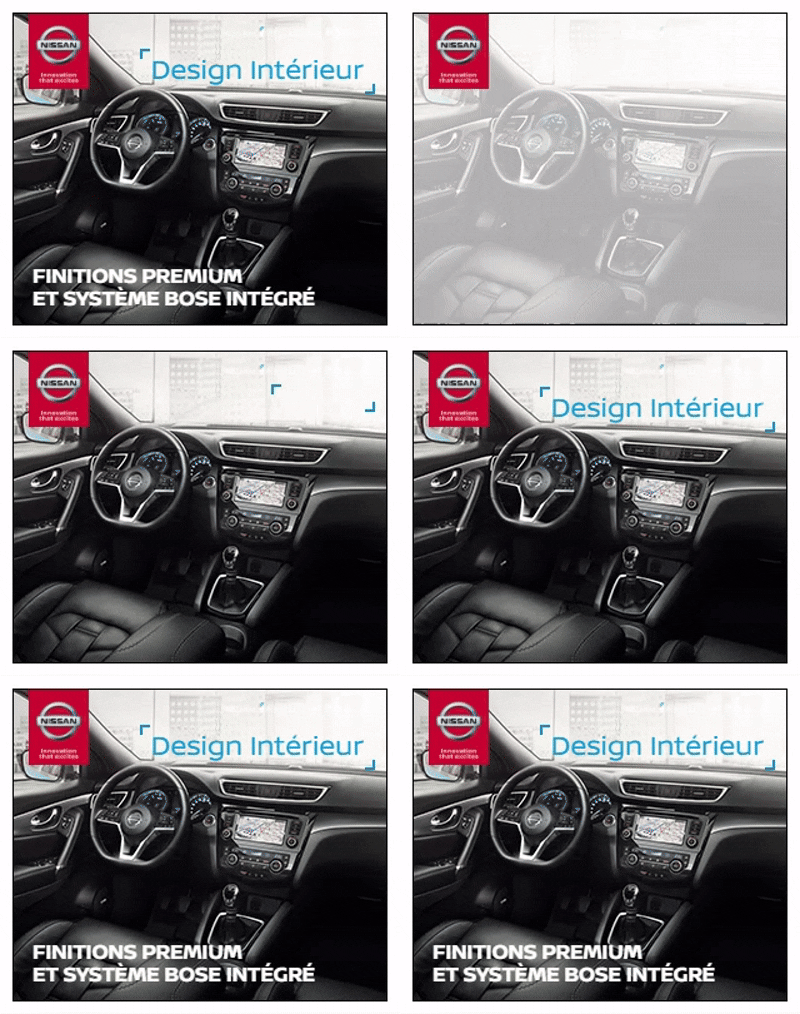
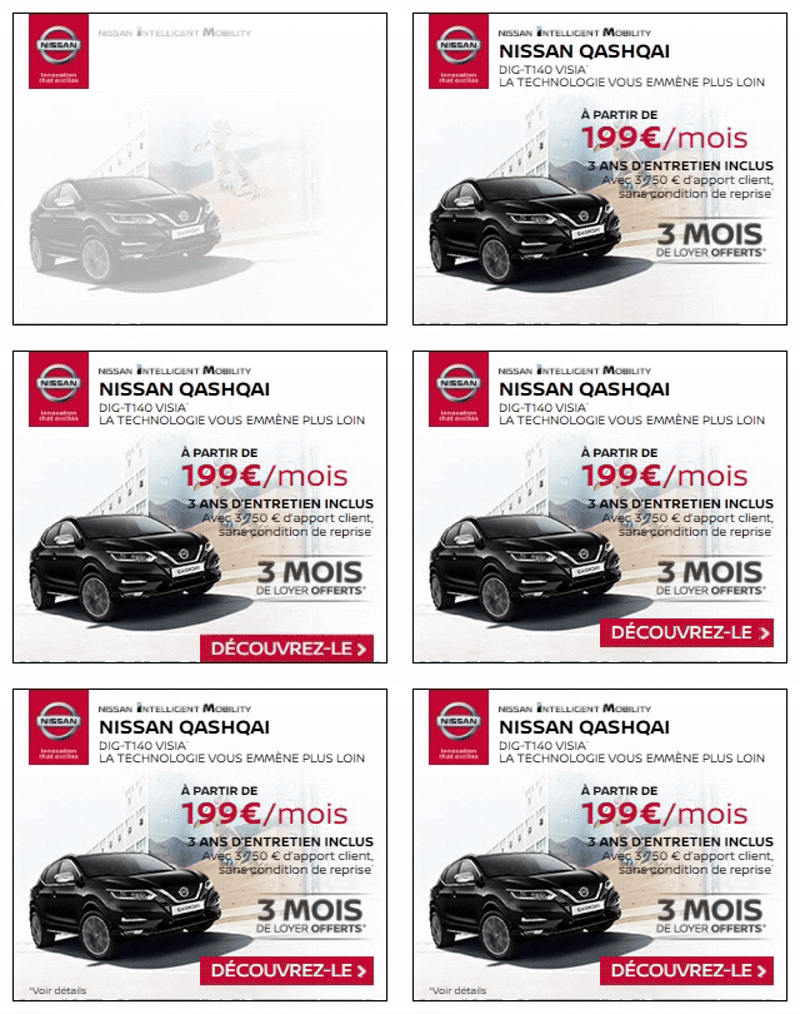
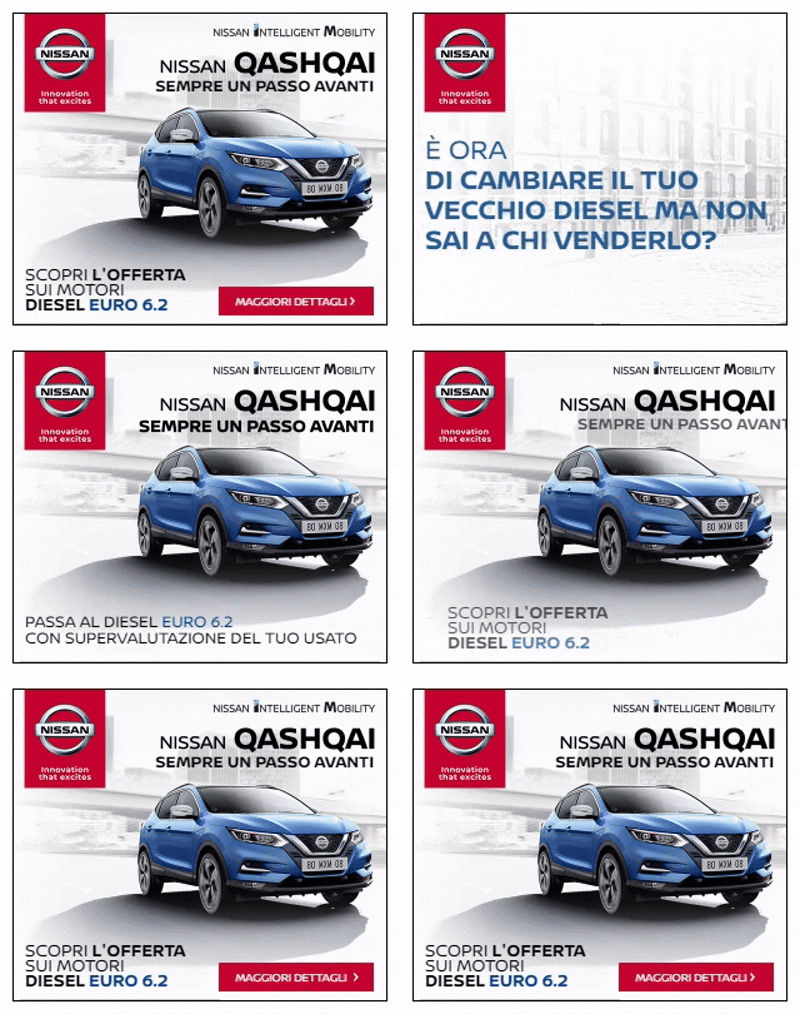
Execute dynamic personalization at scale: Allow local markets to select messaging, visuals, CTAs, and USPs based on audience and regional priorities
-
Maintain creative consistency: Maintain brand alignment across all markets despite variations in offers and messaging
-
Leverage multivariate testing: Continuously test creative combinations (messages, visuals, USPs) to identify top-performing variations
-
Activate data-driven optimization: Capture audience-level insights to refine targeting, messaging, and segmentation
-
Standardized rollout: Ensure consistent processes, timelines, and reporting across all countries
Results
Nissan transformed complex, multi-market campaigns into a scalable, data-driven personalization engine—reducing costs, accelerating execution, and improving performance across Europe.
This shift moved campaign execution from a rigid, centralized model to a flexible, localized approach powered by real-time data and creative intelligence.
Campaign outcomes included:

Significant cost efficiency:
Creative production costs reduced by 9x

Stronger performance
+30% improvement in personalized vs. non-personalized content

Faster time-to-market
Campaign launch time reduced from 1 month → 2 weeks

Smarter optimization
Continuous performance gains through multivariate testing of creative concepts

Deeper audience insights
Identification of high-performing USPs and messaging by audience segment. Improved targeting and campaign effectiveness.

Operational impact
Streamlined collaboration across multiple stakeholders and markets. Consistent reporting and measurement across regions.
Banners